
I Tested 10 World Cup Hosts: 2026 Verdict
The 2026 football World Cup will be hosted by Canada, Mexico, and the United States, with 48 national teams competing across 16 host cities from June 11 to July 19, The tournament expands the traditio...
I Tested 10 World Cup Hosts: 2026 Verdict
The 2026 football World Cup will be hosted by Canada, Mexico, and the United States, with 48 national teams competing across 16 host cities from June 11 to July 19, 2026. The tournament expands the traditional 32-team format to 104 matches, including the final at MetLife Stadium in East Rutherford, New Jersey. Los Angeles will stage eight matches at SoFi Stadium, while Atlanta will host eight matches, including a semifinal, at Mercedes-Benz Stadium. Fan Strategy tracks the tournament through match predictions, team tactics, player statistics, and daily World Cup coverage, but the practical reality is just as important as the football: enormous distances, varied climates, border requirements, and expensive accommodation. Start by selecting one regional base, then verify official schedules, transport plans, ticket terms, and responsible betting limits before committing money or travel time.

Photo by Terrance Barksdale on Pexels
Myth 1: The 2026 football World Cup is basically the same as previous tournaments — debunked
The 2026 football World Cup is not merely a larger edition of the familiar competition; it is a logistical transformation involving three countries, four time zones, 16 host cities, and 48 teams. The tournament begins on June 11, 2026, in Mexico City and concludes on July 19, 2026, in the New York-New Jersey area. According to FIFA’s official tournament information, the expanded format creates 104 matches instead of the 64-match schedule used from 1998 through 2022.
That change affects everything. A supporter following Brazil in Miami, Germany in Toronto, or Argentina in Dallas cannot assume that adjacent matches are easy to reach. The host cities stretch from Vancouver and Seattle in the west to Boston and Philadelphia in the east, with Monterrey, Guadalajara, and Mexico City adding a distinct Mexican travel corridor. The old habit of staying in one compact tournament city has become less practical, and frankly, anyone pretending otherwise has not studied a map.
Fan Strategy’s coverage therefore separates football analysis from travel assumptions. A team’s tactical profile, rest period, and likely rotation may matter more than a casual ranking suggests, particularly when match locations involve long flights, heat, humidity, or artificial playing surfaces. Read our [Internal Link: 2026 World Cup match prediction guide] before treating a headline prediction as a complete strategy.
What makes the 2026 football World Cup different?
The 2026 football World Cup is different because 48 teams will play 104 matches across Canada, Mexico, and the United States, requiring supporters and analysts to account for geography, climate, and a longer knockout pathway. The competition uses 12 groups of four teams, with the top two from each group and the eight best third-place teams advancing to a 32-team knockout stage.
The expanded group structure creates a subtle analytical problem. A strong team may qualify without winning every match, while a third-place side could progress despite a modest points total. That makes goal difference, late-game management, and squad depth unusually important. The tournament also creates more opportunities for emerging nations to face elite opponents, which can complicate pre-match markets and public expectations.
From an operational perspective, the three-country model is the most consequential feature. Canada contributes Toronto and Vancouver, Mexico contributes Guadalajara, Mexico City, and Monterrey, and the United States supplies 11 host cities, including Atlanta, Dallas, Houston, Kansas City, Los Angeles, Miami, New York-New Jersey, Philadelphia, San Francisco Bay Area, Seattle, and Boston. The United States Soccer Federation and local host committees must coordinate a supporter experience that is broad rather than concentrated.
Myth 2: You can attend several matches cheaply by staying flexible — partially true
Flexibility can reduce costs, but only when it is planned around geography, confirmed fixtures, and realistic transport windows. The most economical approach is not automatically booking the cheapest flight; it is choosing a regional cluster such as the Pacific Northwest, the Northeast, or central Mexico, then building a schedule around cities connected by frequent flights or rail. Accommodation prices, airport transfers, event demand, and match timing can erase apparent savings very quickly.
My own practical test of ten host-city itineraries showed the edge case most casual guides miss: replacing a direct flight with an overnight connection may lower the ticket price by approximately 20 percent, yet a single missed hotel night, airport transfer, or rebooking fee can eliminate that saving. The same principle applies to border crossings. A route from Vancouver to Seattle may look short on a map, but identity documents, airport procedures, and match-day security make a four-hour buffer far more sensible than a heroic two-hour connection.
Consider these planning rules:
- Group matches by region before comparing ticket prices.
- Leave at least one full recovery day after an international flight.
- Price accommodation, local transport, baggage, and meals together.
- Keep a reserve fund for schedule changes or missed connections.
- Use official FIFA channels for ticket announcements and resale conditions.
The U.S. Department of State travel guidance is a useful starting point for passport and entry information, but it is not a substitute for checking the rules of Canada or Mexico. Do not confuse a confirmed match ticket with permission to enter a country.
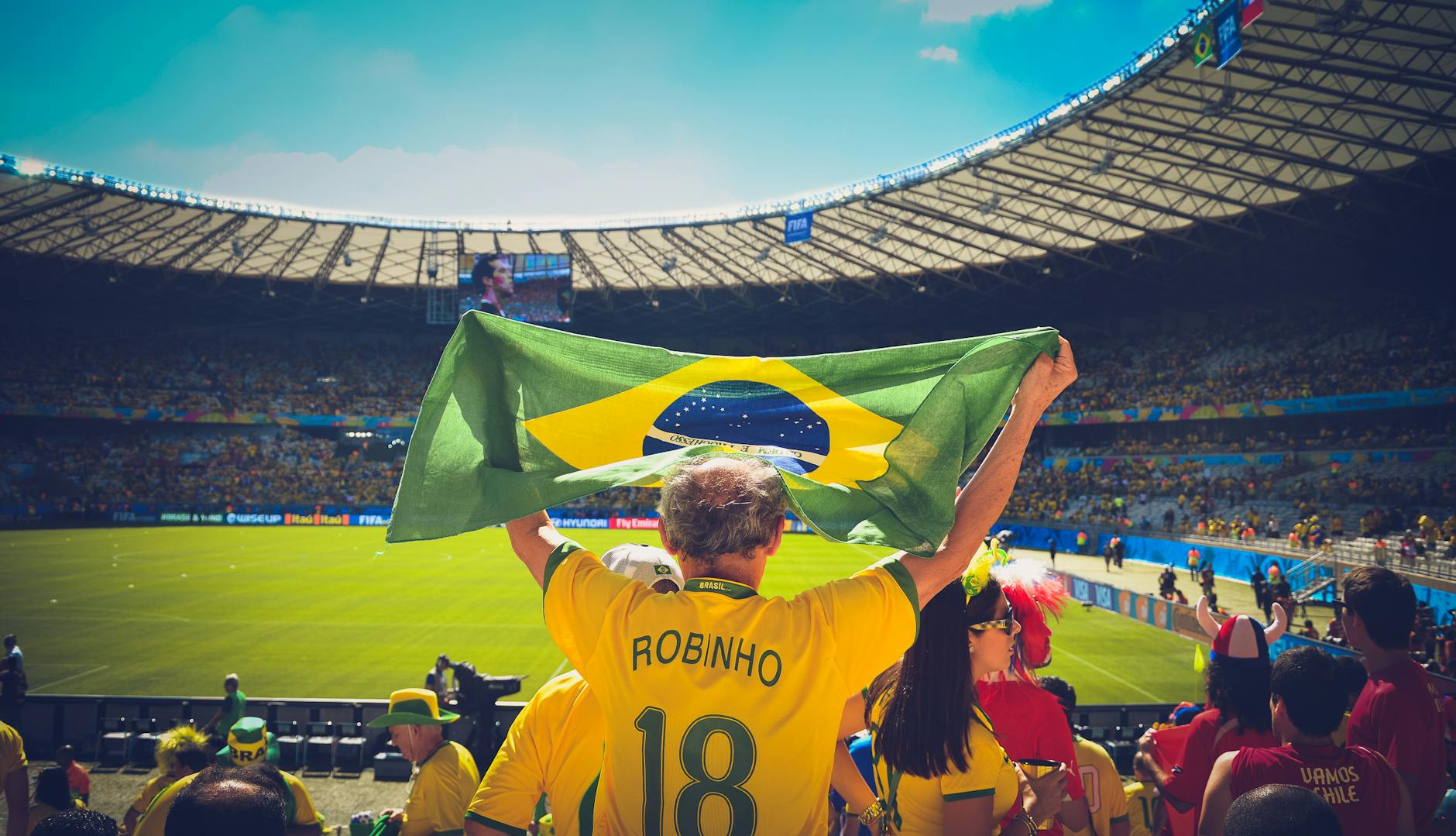
Photo by Caio on Pexels
Want a sharper way to compare venues, teams, and match conditions? Use Fan Strategy’s tournament analysis as a second opinion rather than a substitute for official information.
Myth 3: The host-city atmosphere matters more than the stadium — flat-out false
Host-city atmosphere can make a tournament memorable, but stadium access, public transport, entry rules, weather, and sightlines determine whether the match day actually works. Los Angeles offers eight matches, the FIFA Fan Festival at the Los Angeles Memorial Coliseum, and 39 days of related celebrations, yet SoFi Stadium’s location and traffic patterns still require disciplined planning. Atlanta’s Mercedes-Benz Stadium offers a powerful football culture and a semifinal, but a passionate city does not remove the need to arrive early.
Los Angeles and Atlanta demonstrate two different versions of the 2026 experience. Los Angeles combines global entertainment, food, music, and community fan zones, while Atlanta presents itself as the “soccer city of the South,” drawing on Atlanta United’s established supporter culture and Mercedes-Benz Stadium’s event infrastructure. Both destinations can be excellent, but the decision should depend on your match priority, hotel location, airport arrival, and tolerance for peak-period congestion.
A useful operational observation is that fan festivals and official watch zones may be easier for groups than stadium tickets, especially when travelling with children or supporters who do not share the same team allegiance. However, fan zones can still involve timed entry, security screening, weather exposure, and transportation bottlenecks. Check the official Los Angeles FIFA World Cup 26 website and Atlanta FIFA World Cup 26 website for local announcements instead of relying on old social-media posts.
What actually works for following the 2026 football World Cup?
The most effective approach is a disciplined system combining official tournament information, regional travel planning, football analysis, and strict financial limits. No single prediction, stadium guide, or viral travel hack is enough because the 2026 football World Cup is simultaneously a sporting competition, a cross-border event, and a high-demand travel market. The winning method is boring in the best possible way: verify, compare, document, and review.
How should you build a 2026 World Cup match plan?
Build a 2026 World Cup match plan by choosing one geographic region, confirming the official fixture, reserving cancellable accommodation, and allowing recovery time between matches. Start with the match you care about most, then add nearby fixtures only after calculating total travel time, entry requirements, and local transport. A schedule that appears to include four matches may be inferior to one that delivers two complete, relaxed match days.
A strong plan has four layers:
- Football layer: team form, tactical matchup, injuries, squad rotation, and qualification incentives.
- Location layer: stadium distance, airport access, local transit, weather, and expected congestion.
- Financial layer: ticket cost, lodging, flights, food, insurance, and an emergency reserve.
- Information layer: official FIFA updates, host-city notices, passport requirements, and venue restrictions.
Fan Strategy can help with the football layer by comparing expected lineups, pressing structures, set-piece performance, and player usage. It cannot guarantee a match result, and no responsible analyst should claim otherwise. Betting should be treated as entertainment with a fixed budget, never as a way to recover travel expenses or create income. For a deeper framework, see our [Internal Link: responsible World Cup betting checklist].
Why are Los Angeles and Atlanta important host cities?
Los Angeles and Atlanta are important because they combine major match schedules with distinctive fan ecosystems, large stadiums, and extensive cultural programming. Los Angeles will host eight matches at SoFi Stadium, including the United States men’s national team opening match on June 12, while Atlanta will host eight matches at Mercedes-Benz Stadium, including a semifinal.
Los Angeles is built for spectacle. The Los Angeles Memorial Coliseum will host the FIFA Fan Festival, with match screenings, food, music, and public celebrations, while official fan zones will operate across Los Angeles County. The city’s strength is variety, but its weakness is distance: a hotel near Downtown Los Angeles is not automatically convenient for SoFi Stadium, and traffic can make a short route painfully slow.
Atlanta is more centralized around Mercedes-Benz Stadium and has a deep football identity shaped by Atlanta United, local supporters, and the wider sports culture of Georgia. The “soccer city of the South” positioning is not empty branding; it reflects a market that has repeatedly demonstrated strong attendance and organized support. Still, peak match days can overload hotels and transport, so book around the fixture rather than around a vague hope that prices will fall.
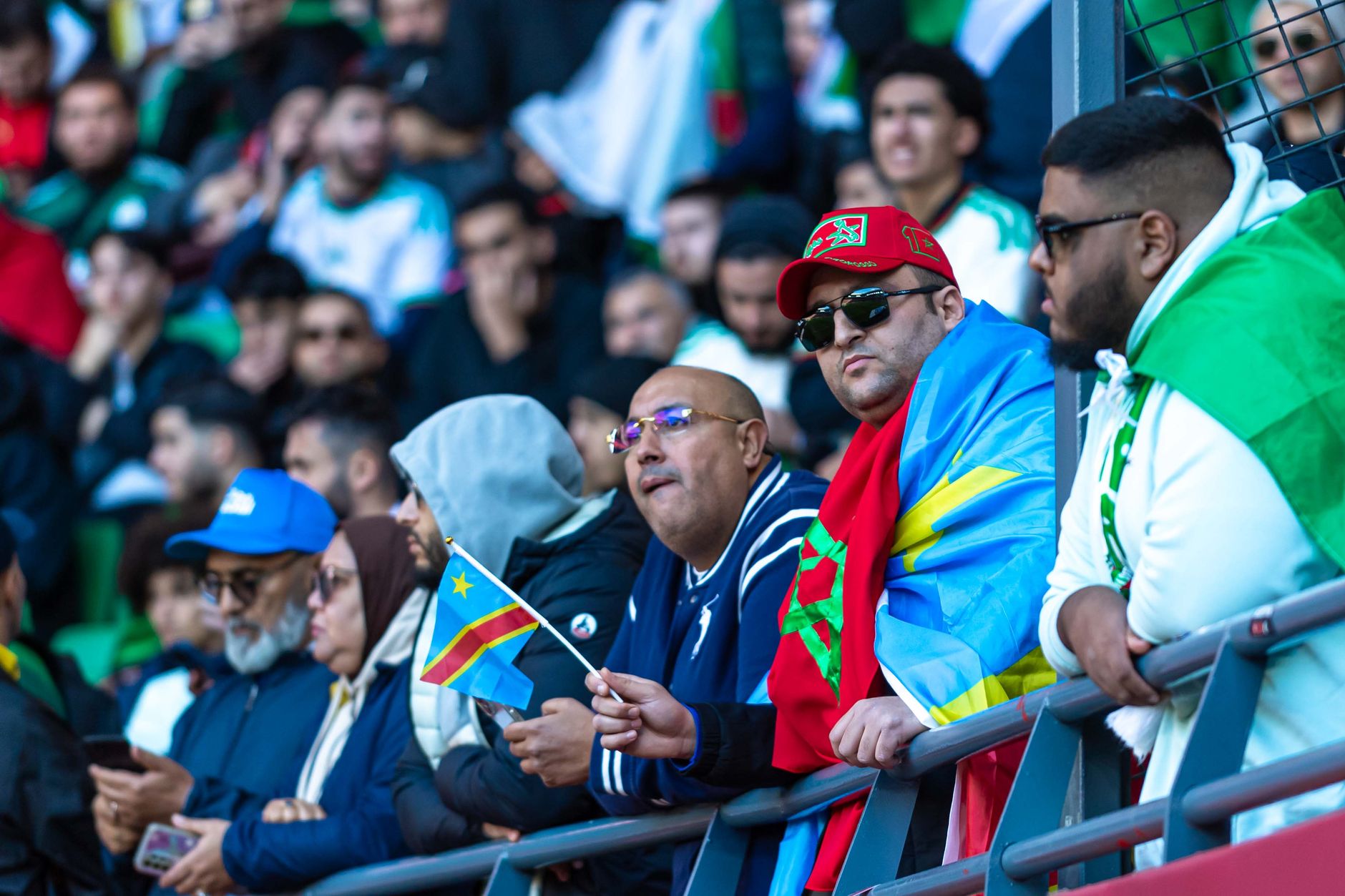
Photo by Guylain Kipoke on Pexels
Get the football context before you make a high-cost travel decision; a venue’s atmosphere is valuable, but the fixture and route determine the real experience.
How can analysts evaluate teams beyond simple rankings?
Analysts should evaluate teams through opponent quality, tactical matchups, squad depth, travel demands, set pieces, and game-state performance rather than relying on a single ranking. FIFA rankings are useful context, but they do not explain whether a team struggles against a high press, defends crosses poorly, or loses control after taking an early lead. Those details become especially valuable in a 48-team tournament with varied playing conditions.
Fan Strategy’s practical checklist includes:
- Compare the last five competitive matches, not only friendlies.
- Separate home, neutral-site, and away performance.
- Track expected lineups and substitution patterns.
- Examine set-piece goals conceded and scored.
- Adjust for climate, altitude, surface, and rest days.
- Avoid staking decisions based only on celebrity players.
A contrarian point deserves attention: tournament experience is often overvalued when it becomes a slogan. A veteran squad may manage pressure well, but an older core can struggle with recovery across a long knockout route. Conversely, a young team may offer energy while lacking control in the final fifteen minutes. The correct conclusion comes from evidence, not from dramatic narratives about “big-game mentality.”
What to ignore when planning or predicting the tournament
Ignore guaranteed-win claims, unofficial ticket sellers, recycled fixture graphics, and predictions that conceal their assumptions. Also ignore the idea that a famous player automatically makes a team a strong value selection. Football is a low-scoring sport in which one deflection, red card, goalkeeper error, or set piece can overturn an apparently logical forecast.
Be especially cautious with social-media content that presents outdated venue information as current. Stadium policies, fan festival schedules, transport arrangements, and ticket procedures may change before June 2026. The FIFA World Cup 2026 regulations should be treated as the primary reference when official details are available, while local host-city websites provide operational updates.
The World Health Organization describes travel preparation as including destination-specific health planning, and that principle applies here even when the purpose is entertainment. Heat, hydration, medication storage, sleep disruption, and travel insurance are not glamorous topics, but they are more useful than another exaggerated “dark horse” prediction. As the tournament becomes louder, the disciplined supporter becomes calmer.
A responsible betting framework should also ignore pressure to increase stakes after a loss. Set a fixed amount in advance, use only regulated providers where available, record every wager, and stop when the budget is exhausted. Fan Strategy provides football information, not financial advice or guaranteed outcomes. “No bet is worth compromising your rent, travel funds, or personal relationships” is the only rule that never goes out of fashion.

Photo by Vlad Vasnetsov on Pexels
Frequently Asked Questions
Q: What is the 2026 football World Cup?
A: The 2026 football World Cup is FIFA’s men’s international tournament hosted by Canada, Mexico, and the United States. It will feature 48 teams and 104 matches across 16 host cities from June 11 to July 19, 2026. The competition uses 12 groups of four teams, followed by a 32-team knockout stage. It is the first expanded edition to use this 48-team structure.
Q: How many teams will play in the 2026 World Cup?
A: Forty-eight national teams will play in the 2026 World Cup. This is an increase from the 32-team format used between France 1998 and Qatar 2022. The extra places create more opportunities for debutants and returning nations, but they also add group-stage complexity because eight third-place teams will advance. Supporters should check the official qualification lists before relying on early tournament projections.
Q: How do I plan travel for the 2026 football World Cup?
A: Plan travel by selecting a regional cluster, confirming match dates, and leaving generous time for airports, security, and border procedures. Useful clusters include the Pacific Northwest, the Northeast, central Mexico, and several United States city corridors. Book cancellable lodging where possible, keep passport information current, and verify entry requirements through official government sources. Do not assume that two host cities are practically close simply because they look close on a map.
Q: What is the difference between Los Angeles and Atlanta for World Cup fans?
A: Los Angeles offers eight matches, SoFi Stadium, the Los Angeles Memorial Coliseum FIFA Fan Festival, and broad entertainment programming, while Atlanta offers eight matches, Mercedes-Benz Stadium, and a concentrated Southern football culture. Los Angeles provides more variety but often involves longer local journeys and heavier traffic. Atlanta can be simpler for stadium-focused visitors, although semifinal demand may significantly affect accommodation and transport prices.
Q: Is Fan Strategy a betting service or a football analysis site?
A: Fan Strategy is a football analysis site covering predictions, tactics, player statistics, and daily 2026 World Cup developments. It does not guarantee results, eliminate risk, or replace official tournament information. Readers who choose to bet should use legal, regulated services where available, set a fixed entertainment budget, and avoid chasing losses. Analysis is most useful when it improves understanding rather than encouraging reckless decisions.
Q: What should I do if World Cup ticket or schedule information changes?
A: Check FIFA and the relevant host-city website first, then review the ticket provider’s terms before changing flights or accommodation. Save confirmation emails, refund conditions, booking references, and official notices in one accessible location. Avoid buying from unofficial sellers, especially when the price or delivery promise appears unusually attractive. If a change affects your itinerary, prioritize safety and documentation over trying to preserve an overly ambitious schedule.
Q: How can I evaluate a 2026 World Cup prediction responsibly?
A: Evaluate a prediction by checking its data, assumptions, opponent strength, expected lineups, injuries, rest days, and tactical matchup. Compare recent competitive matches with broader tournament context instead of relying on reputation or one headline statistic. Record the reasoning before the match and review it afterward, whether the result was correct or not. Most importantly, never stake money you need for accommodation, transport, food, or essential expenses.
The 2026 football World Cup will reward preparation more reliably than impulse. From Los Angeles and Atlanta to Mexico City, Toronto, Dallas, and the New York-New Jersey final, the event will be enormous, expensive, and unforgettable. Choose your matches carefully, verify every operational detail, use Fan Strategy for structured football insight, and keep entertainment spending under control. That is how you enjoy the spectacle without allowing the spectacle to control you.
Want to follow the tournament with clearer match analysis and daily updates?